Tirth J.

SellerApp × QC

SellerApp · Product Redesign
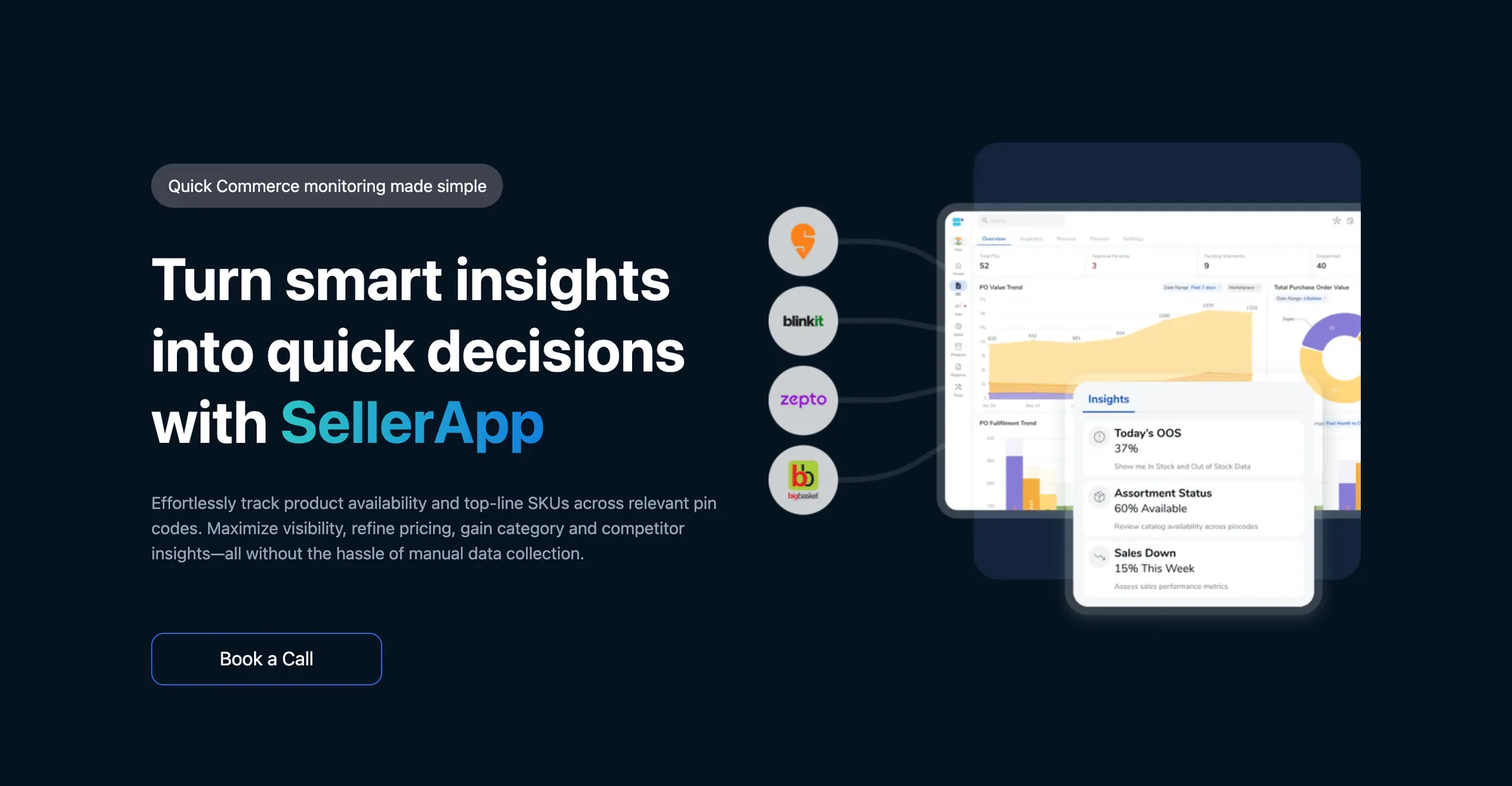
SellerApp Quick Commerce workspace on a dark navy field, with Swiggy Instamart, Blinkit, Zepto and bigbasket wired into a single dashboard and an Insights panel surfacing today's out-of-stock rate, assortment status and sales trend

Introduction

India's commerce stack is rewiring itself around open networks. SellerApp × QC, designed with ONDC and Google, onboards small sellers in a few taps, normalises their catalogs across every buyer app, and makes a brand-new protocol feel ordinary on day one.

Details
RoleUX Designer II
ClientSellerApp
Year2023 - 2024
Timeline2 months
TypeProduct Redesign
OutcomePartnered with ONDC & Google
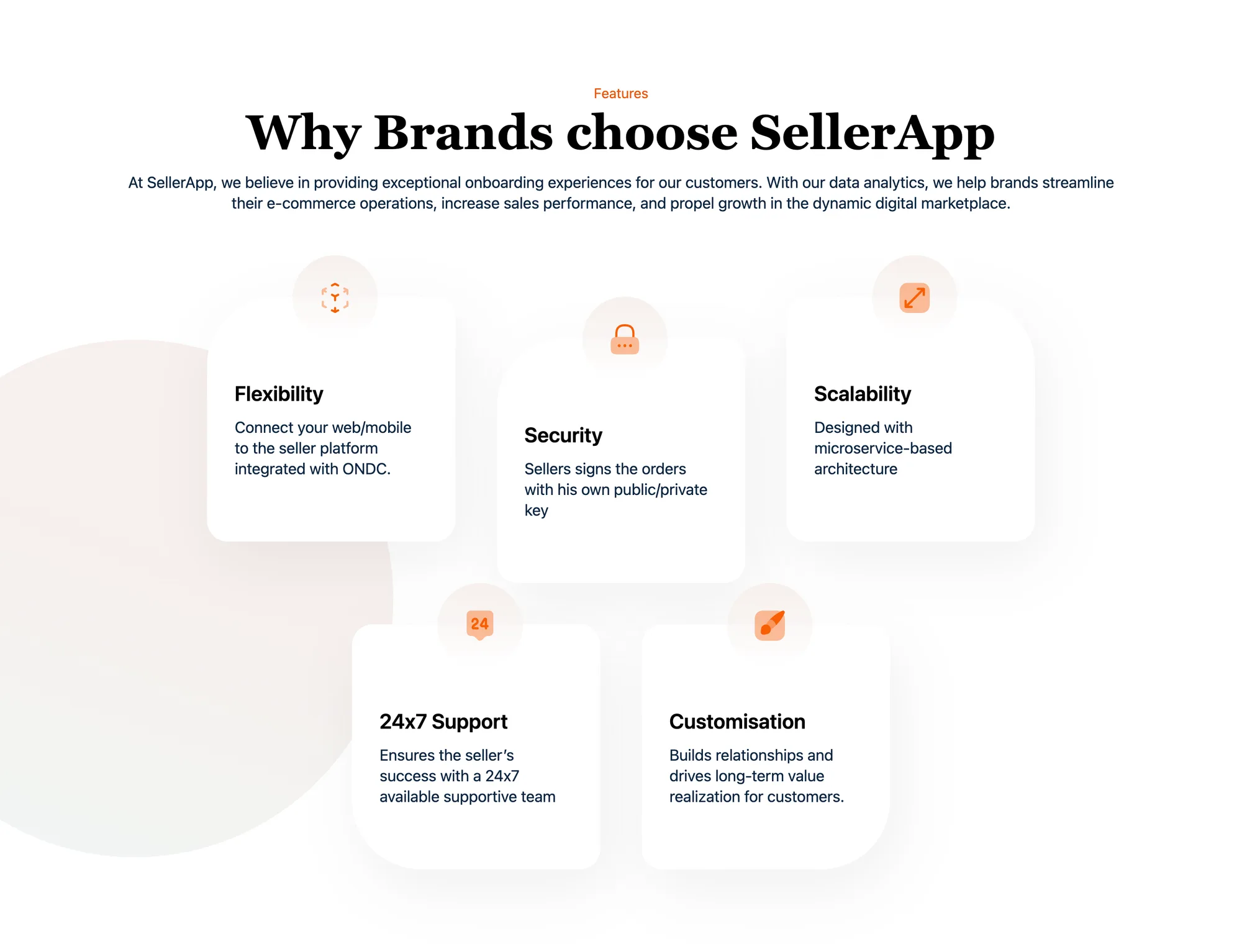
Why Brands choose SellerApp — five cards on a white field: Flexibility, Security, Scalability, 24x7 Support and Customisation, each describing how a seller connects to the ONDC network
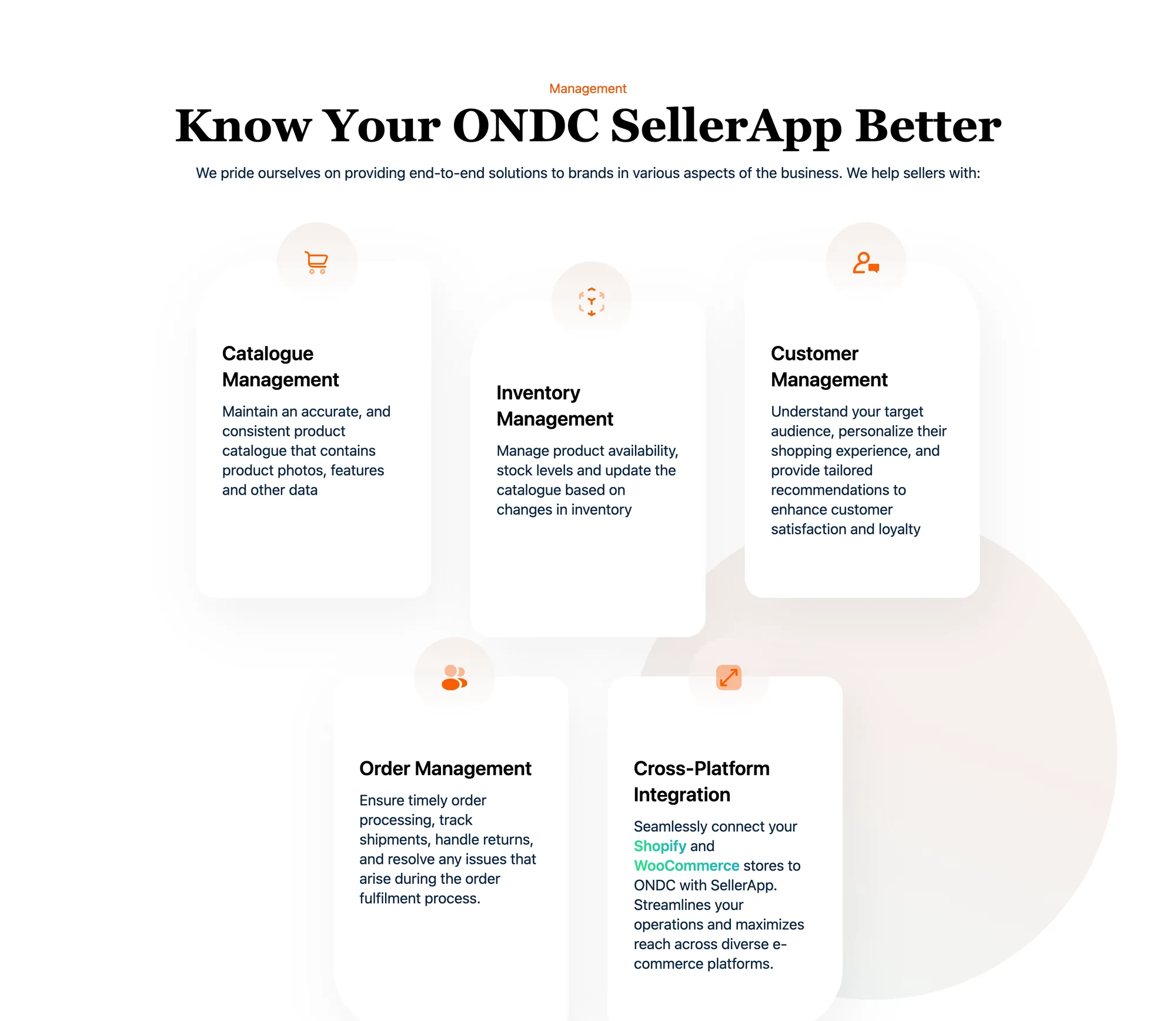
Know Your ONDC SellerApp Better — five staggered cards covering Catalogue, Inventory, Customer and Order Management plus Cross-Platform Integration with Shopify and WooCommerce

ONDC arrived as a protocol, not a product. A small retailer could be eligible for the network and still have no way onto it: no storefront, no catalogue in a shape the network accepts, no sense of which buyer app a listing would end up in. Most of the sellers it was built for were selling online for the first time.

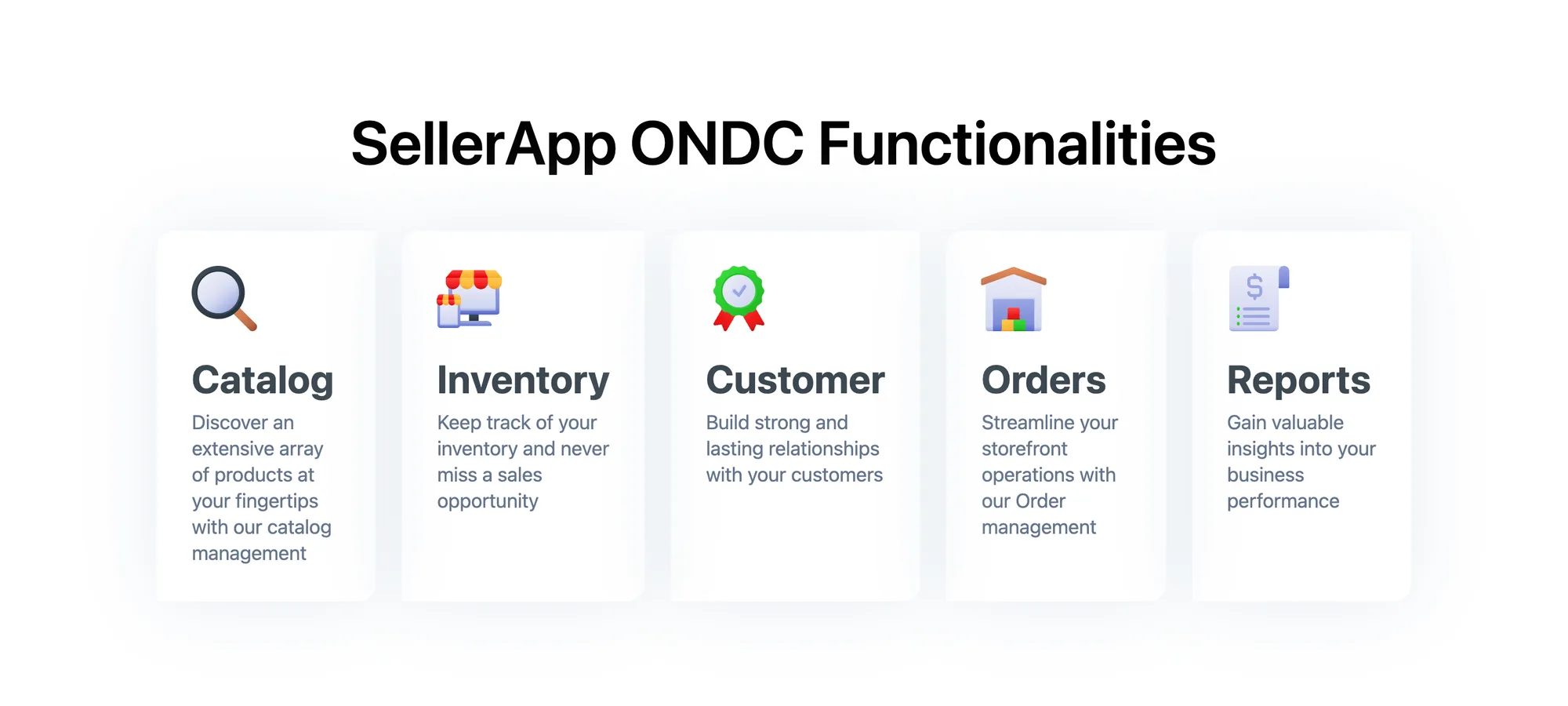
So the seller platform was designed to be unremarkable on purpose. Five things a shopkeeper already understands catalogue, inventory, customers, orders, reports with the protocol kept underneath them, where it belongs.
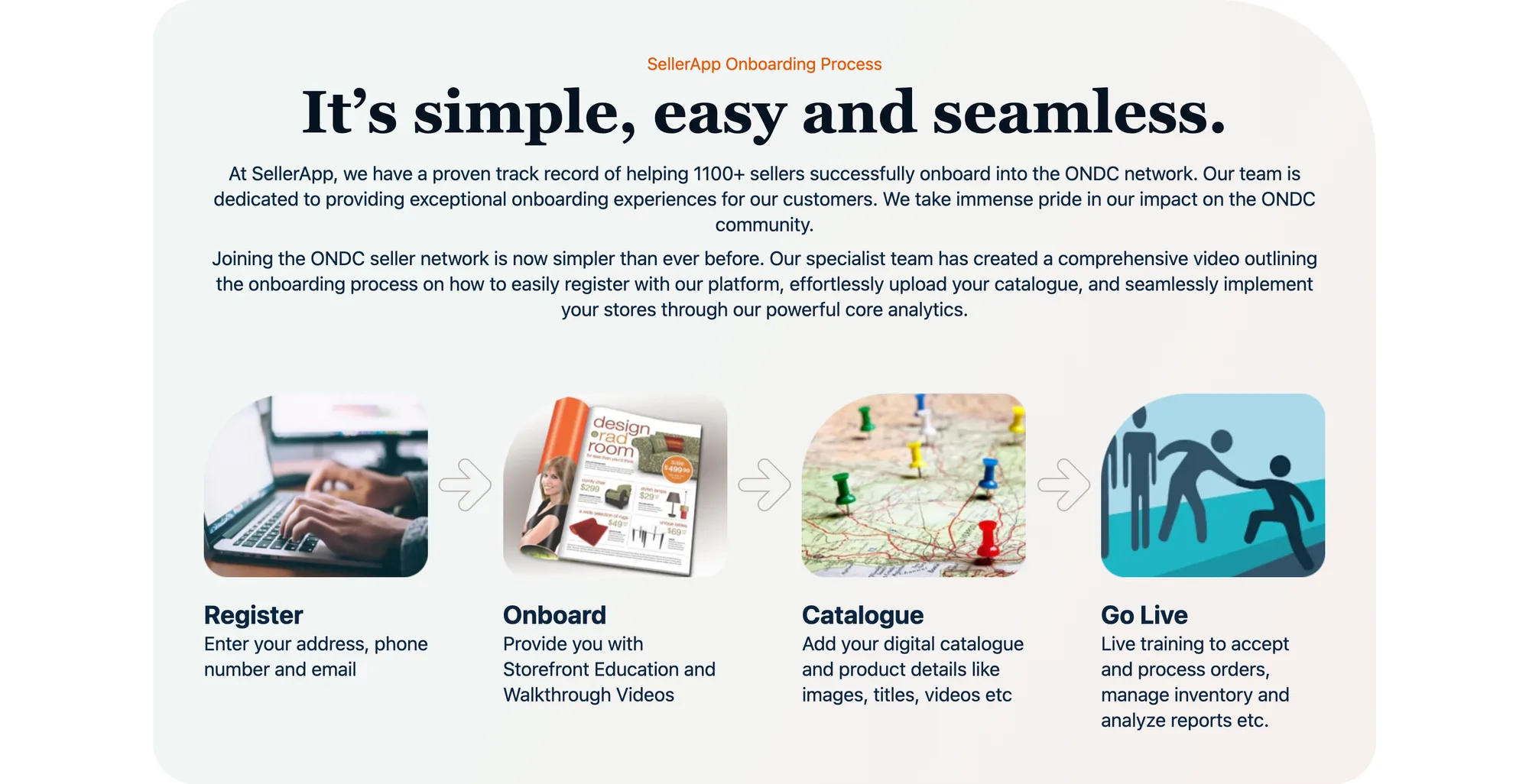
The SellerApp ONDC onboarding process laid out in four steps — Register, Onboard, Catalogue, Go Live — each with a thumbnail and a one-line description of what the seller does
SellerApp ONDC Functionalities — five product cards named Catalog, Inventory, Customer, Orders and Reports
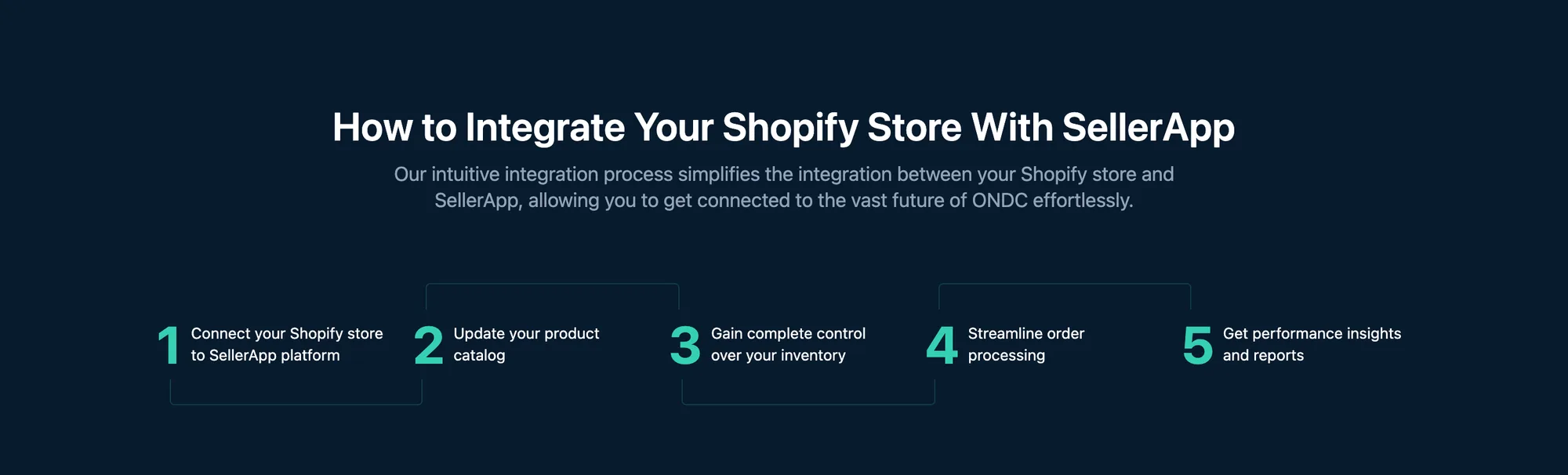
How to Integrate Your Shopify Store With SellerApp — a five-step numbered path on dark navy, from connecting the store through catalog, inventory, order processing and performance reports
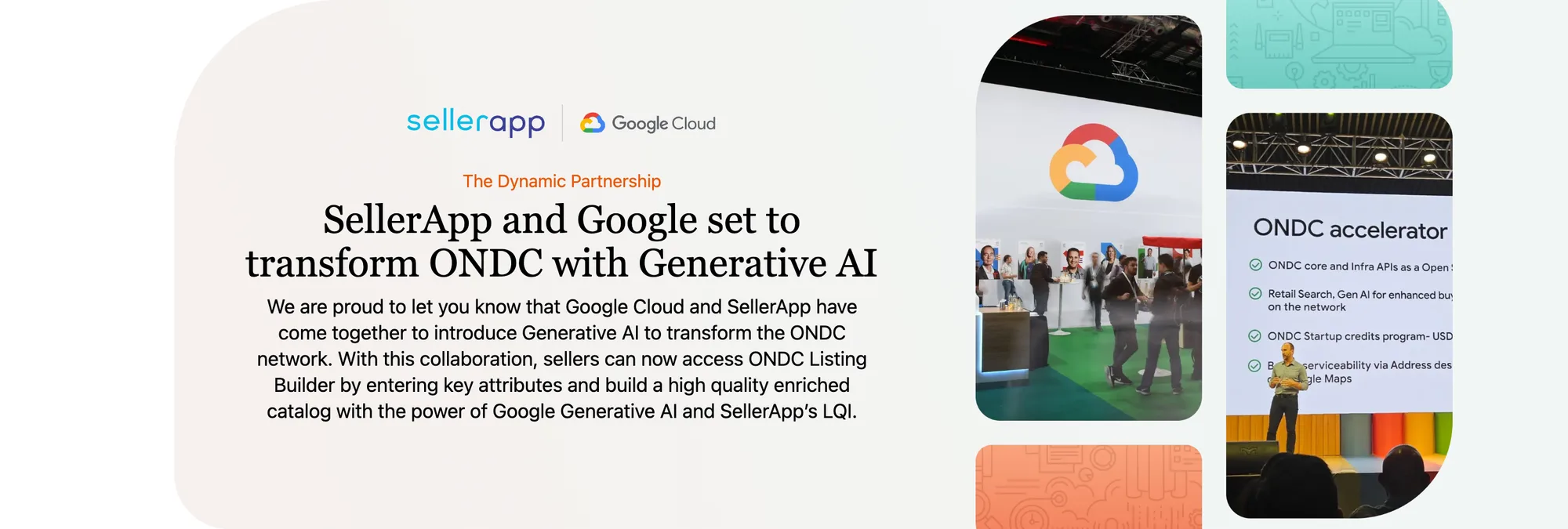
The SellerApp and Google Cloud lockup above the line 'SellerApp and Google set to transform ONDC with Generative AI', beside photographs from the Google Cloud stand and an ONDC accelerator keynote slide

Google Cloud came in on the hardest part: the catalogue. SellerApp's listing quality index paired with Google's generative models became ONDC Listing Builder a seller enters a handful of attributes and gets back a title, bullet points and a description, each field scored and labelled against what the network expects rather than quietly rewritten. Fix Needed, Can be Improved, a score out of ten. The seller keeps the last word; the model does the typing.

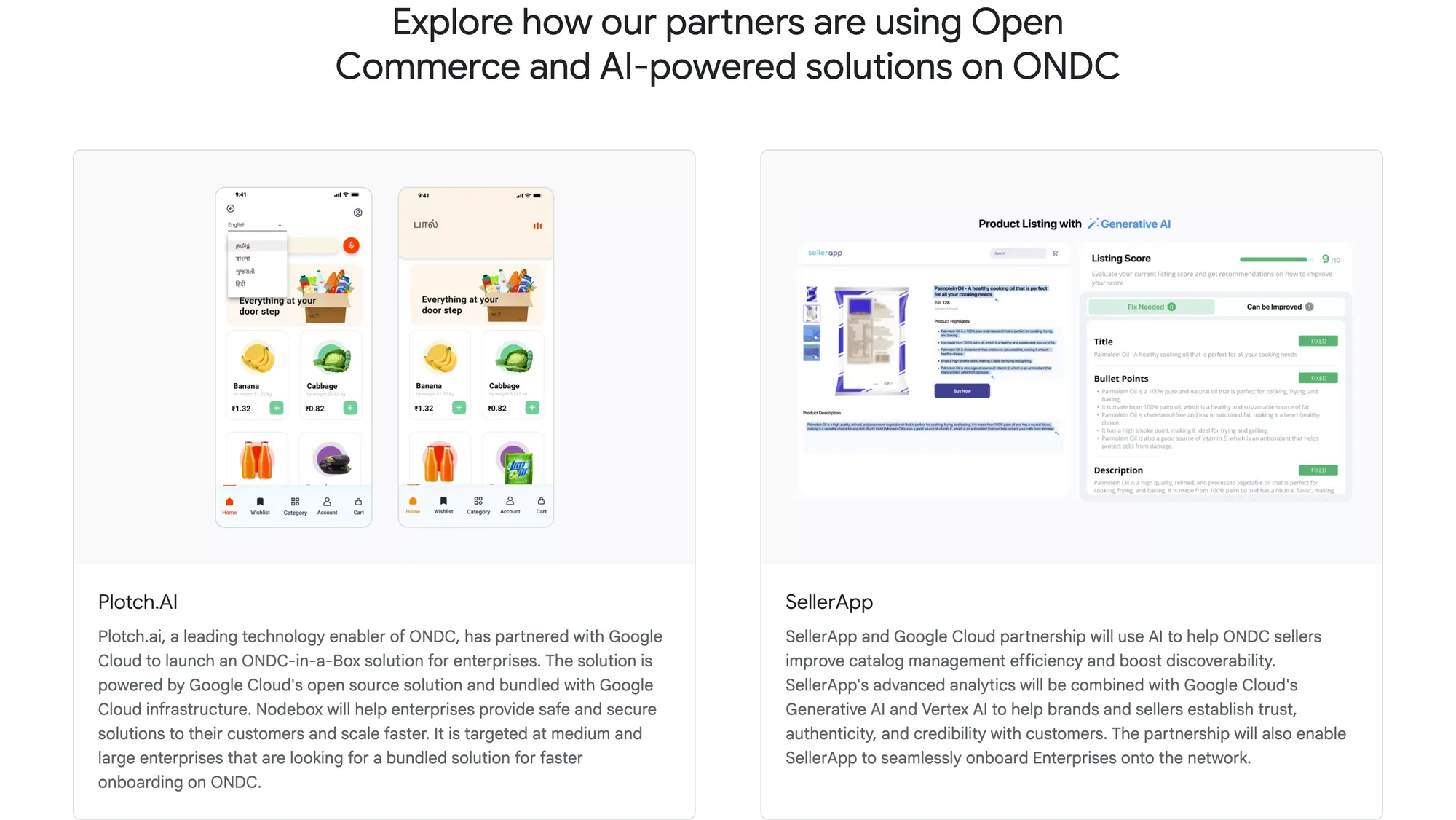
Google went on to publish the surface on its own Open Commerce site, one of two partner case studies there.
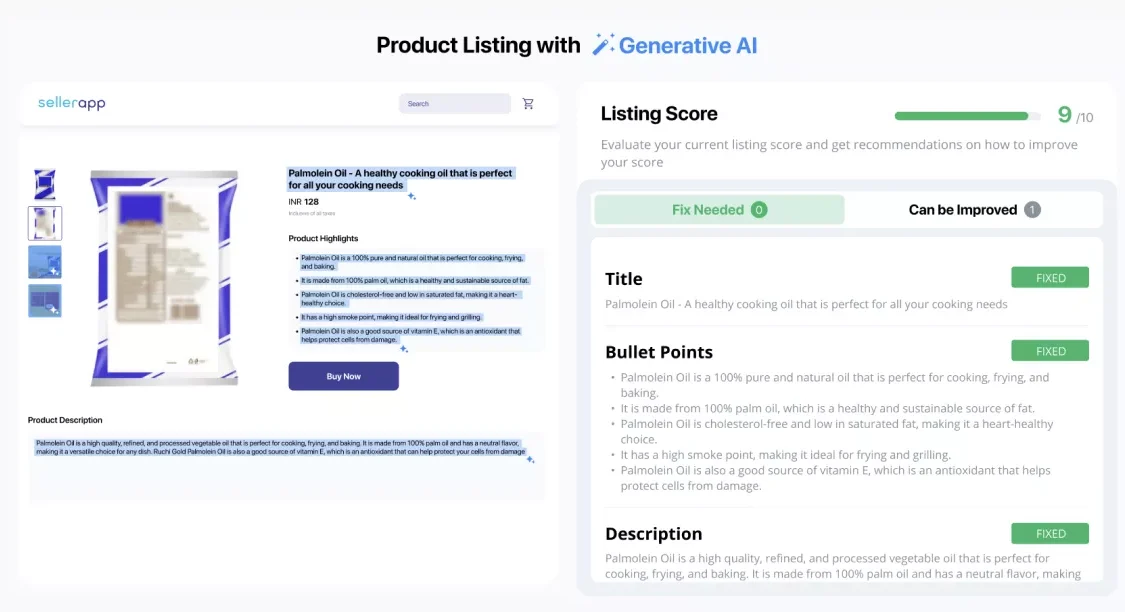
Product Listing with Generative AI — a SellerApp storefront preview on the left and a Listing Score panel on the right showing 9 out of 10, with Fix Needed and Can be Improved tabs and per-field status chips on title, bullet points and description
Google's Open Commerce partner case studies section, with Plotch.AI on the left and SellerApp on the right, describing how SellerApp's analytics combine with Google Cloud's generative AI and Vertex AI for ONDC sellers

Google's Open Commerce site, where SellerApp is one of two published partner case studies.
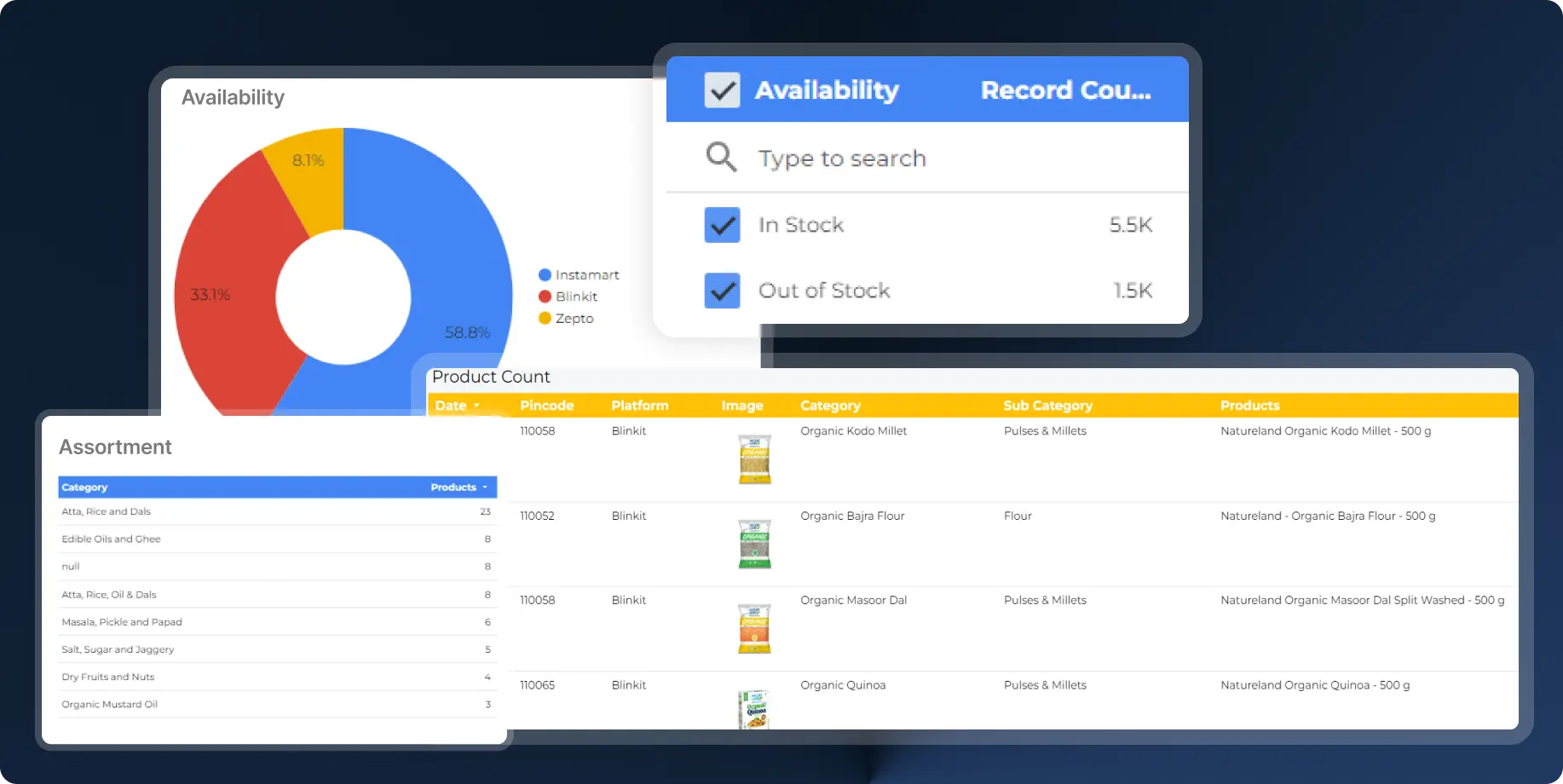
Quick Commerce availability view — an in-stock versus out-of-stock donut split across Instamart, Blinkit and Zepto, a searchable availability filter, an assortment table by category and a pin-code level product count table with product thumbnails
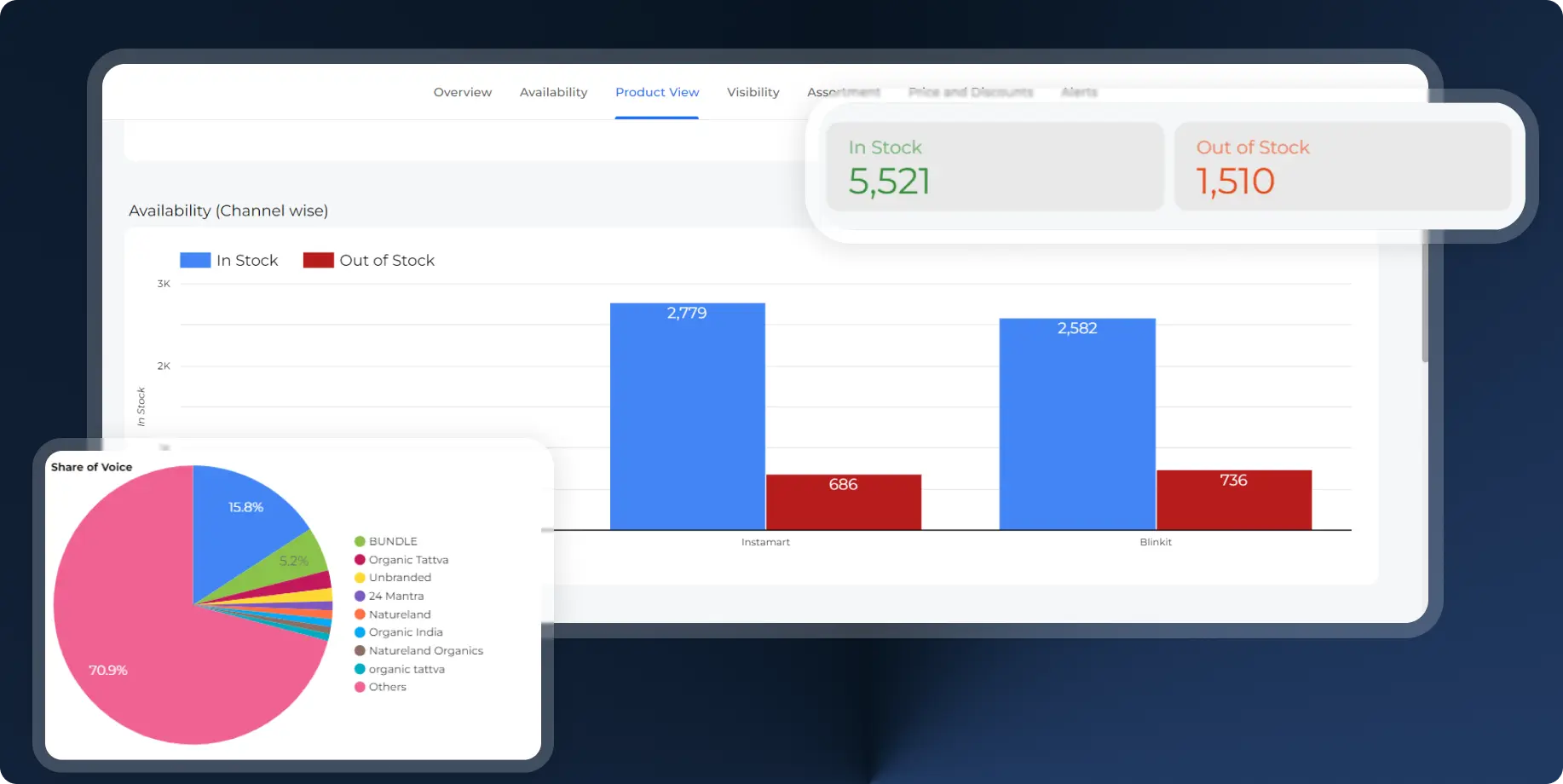
The Product View tab of the Quick Commerce module — channel-wise in-stock and out-of-stock bars for Instamart and Blinkit, headline stock counters, and a share-of-voice pie broken down by competing brands

Getting onto a network is half the problem. The other half is knowing what became of your catalogue after it left. Quick commerce made that urgent the same SKU can be in stock in one pin code and missing in the next one over, live on Blinkit and absent from Instamart, with nobody telling you either way.

So the quick-commerce surface is built around a single question where am I, and where am I not and only widens into share of voice, assortment, keyword position and price parity once that one is answered.
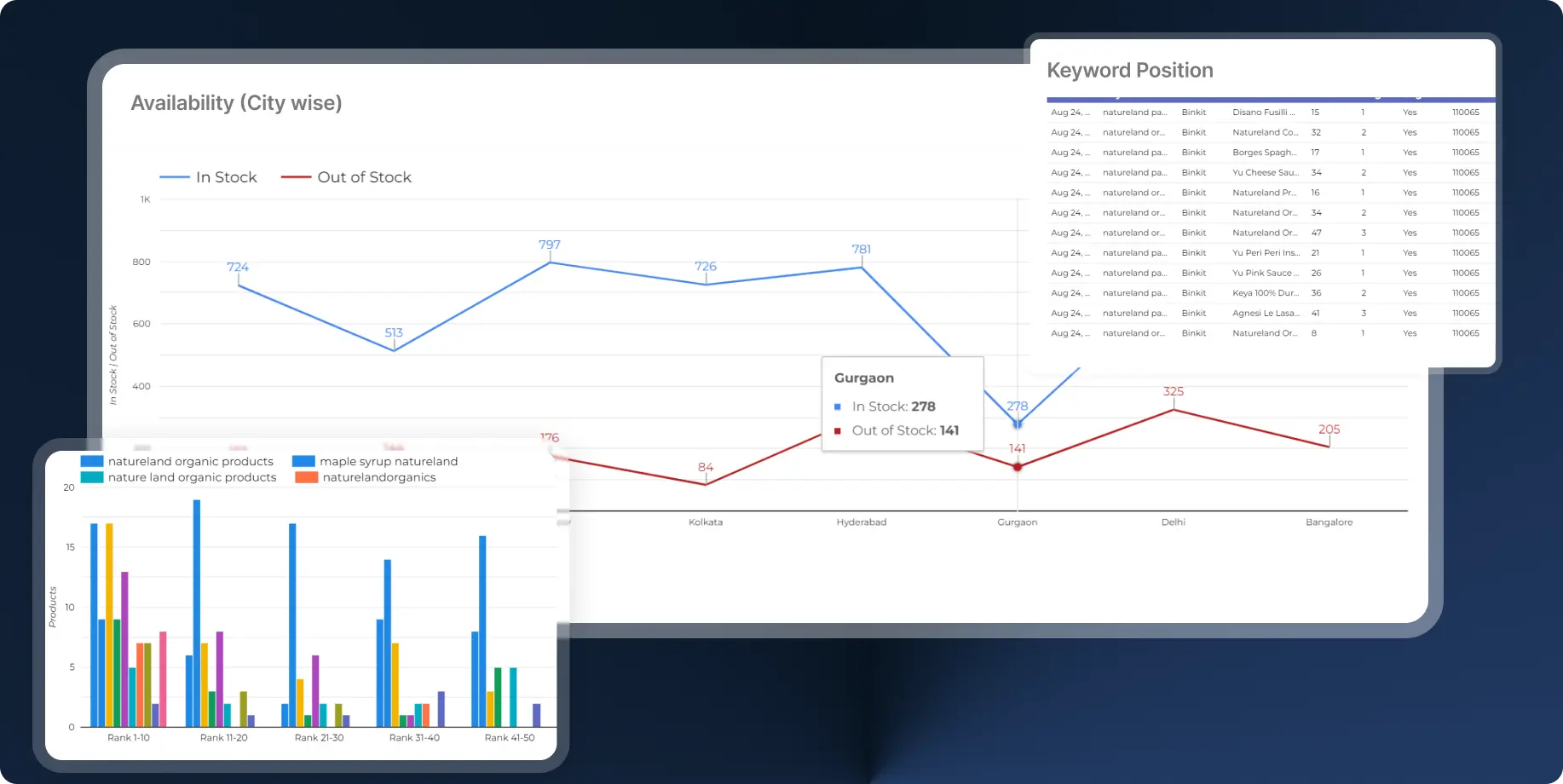
City-wise availability plotted as in-stock and out-of-stock lines across Kolkata, Hyderabad, Gurgaon, Delhi and Bangalore with a hover readout, alongside a keyword position table and a rank-band distribution chart
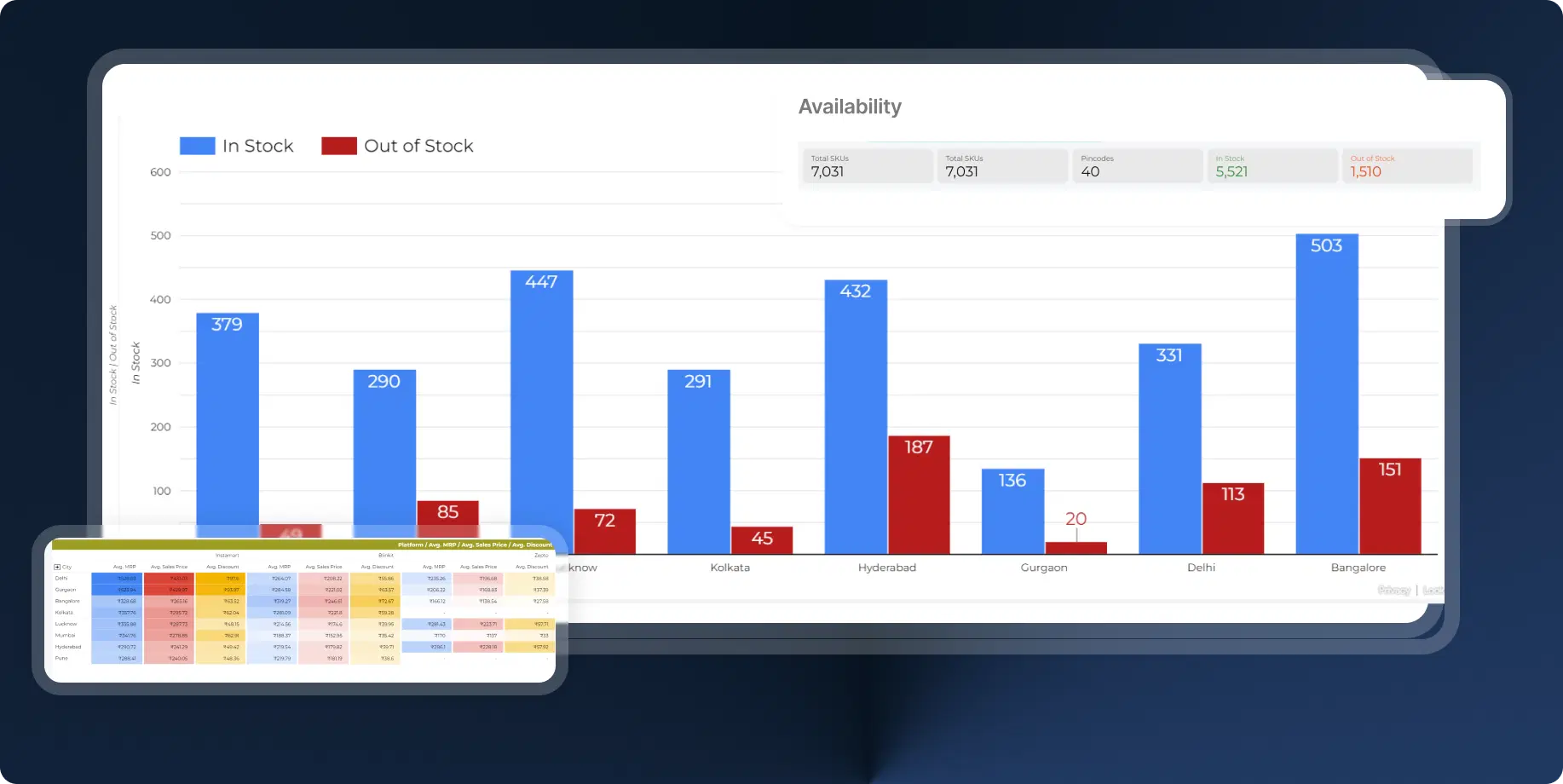
Availability bars by city over a summary strip of total SKUs, pin codes covered and in-stock versus out-of-stock counts, with a colour-coded MRP, sales price and discount table per platform tucked in the corner
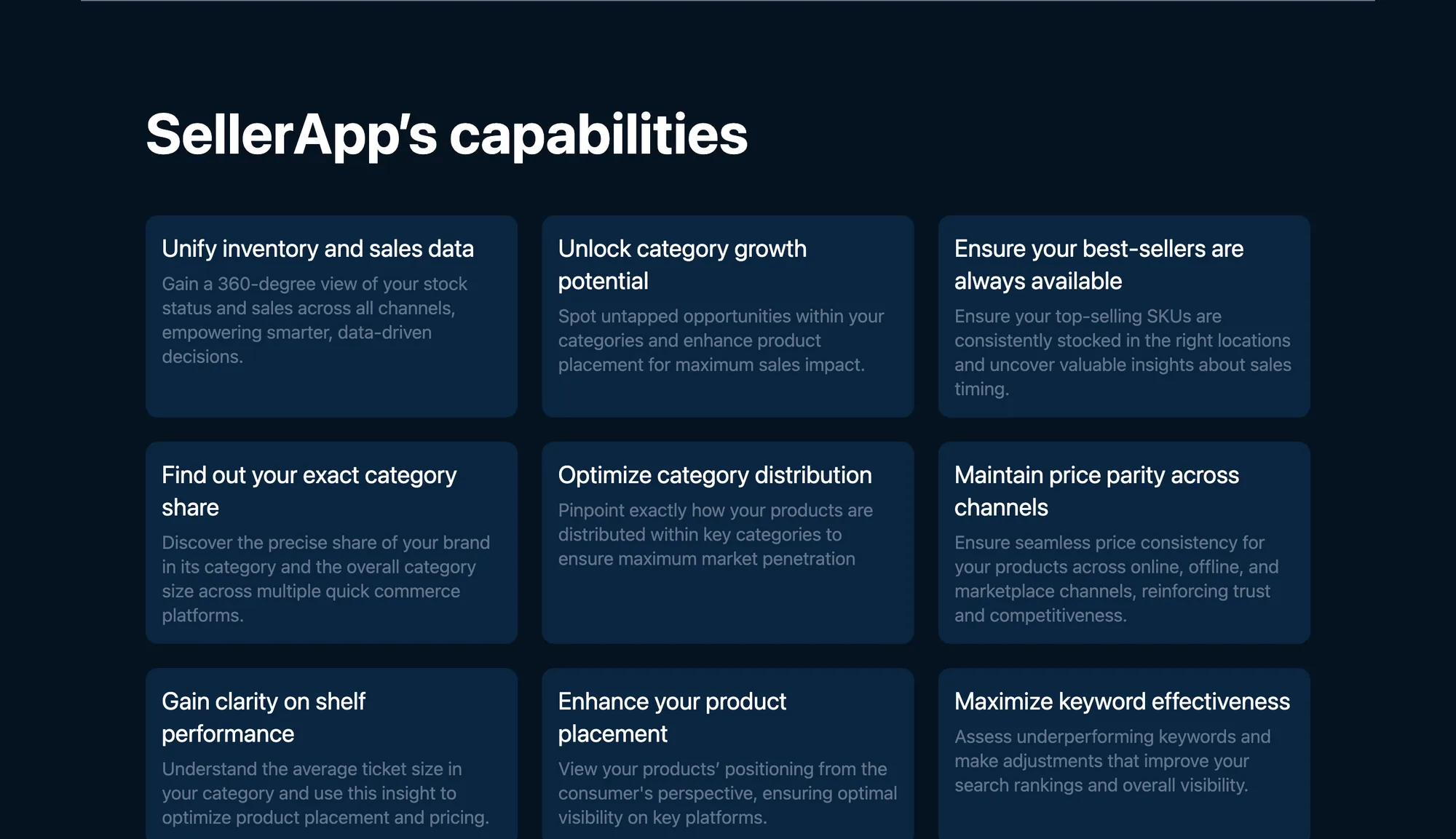
SellerApp's capabilities laid out as nine cards on navy, covering unified inventory and sales data, category share and distribution, best-seller availability, price parity, shelf performance, product placement and keyword effectiveness

The work shipped as SellerApp's ONDC seller platform, the Shopify and WooCommerce bridges that feed it, and the quick-commerce module that watches the catalogue once it is live. SellerApp's own page credits the onboarding flow with 1,100+ sellers on the network, and Google lists the partnership on opencommerce.withgoogle.com as one of two ways it is bringing AI to ONDC sellers.

New seller registrations are paused at the time of writing while the team scales the network integration. The storefront, catalogue and analytics surfaces are still running for the sellers already on it.