ThreadJet
Outbox Labs · 0 → 1 Product
Introduction
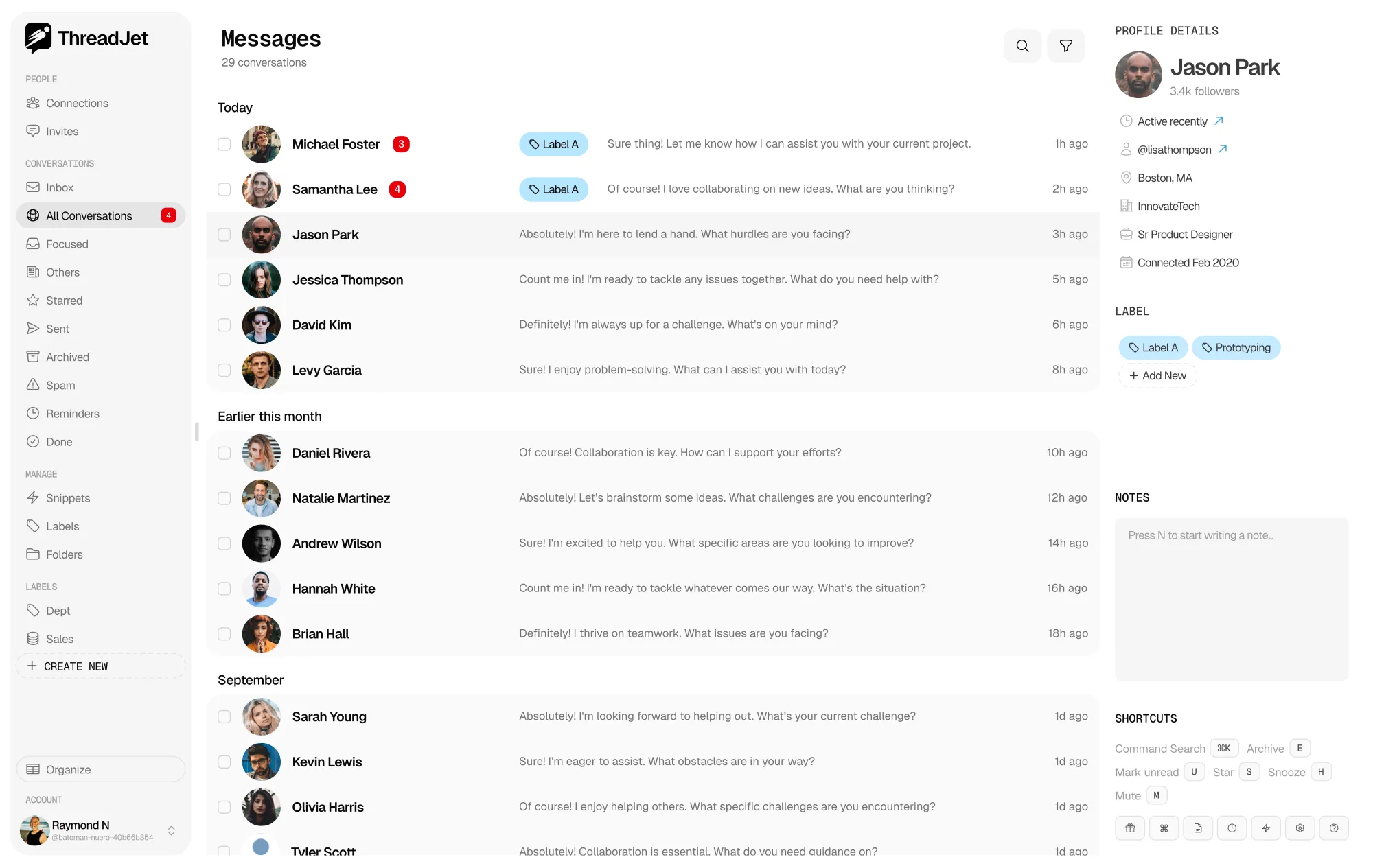
ThreadJet treats LinkedIn like an inbox, not a feed. We designed the messaging surface a power user actually wants: keyboard-first, omni-search, AI-drafted replies, pitched as Superhuman for the platform that didn't have one. The shape of the product is the argument.
Details
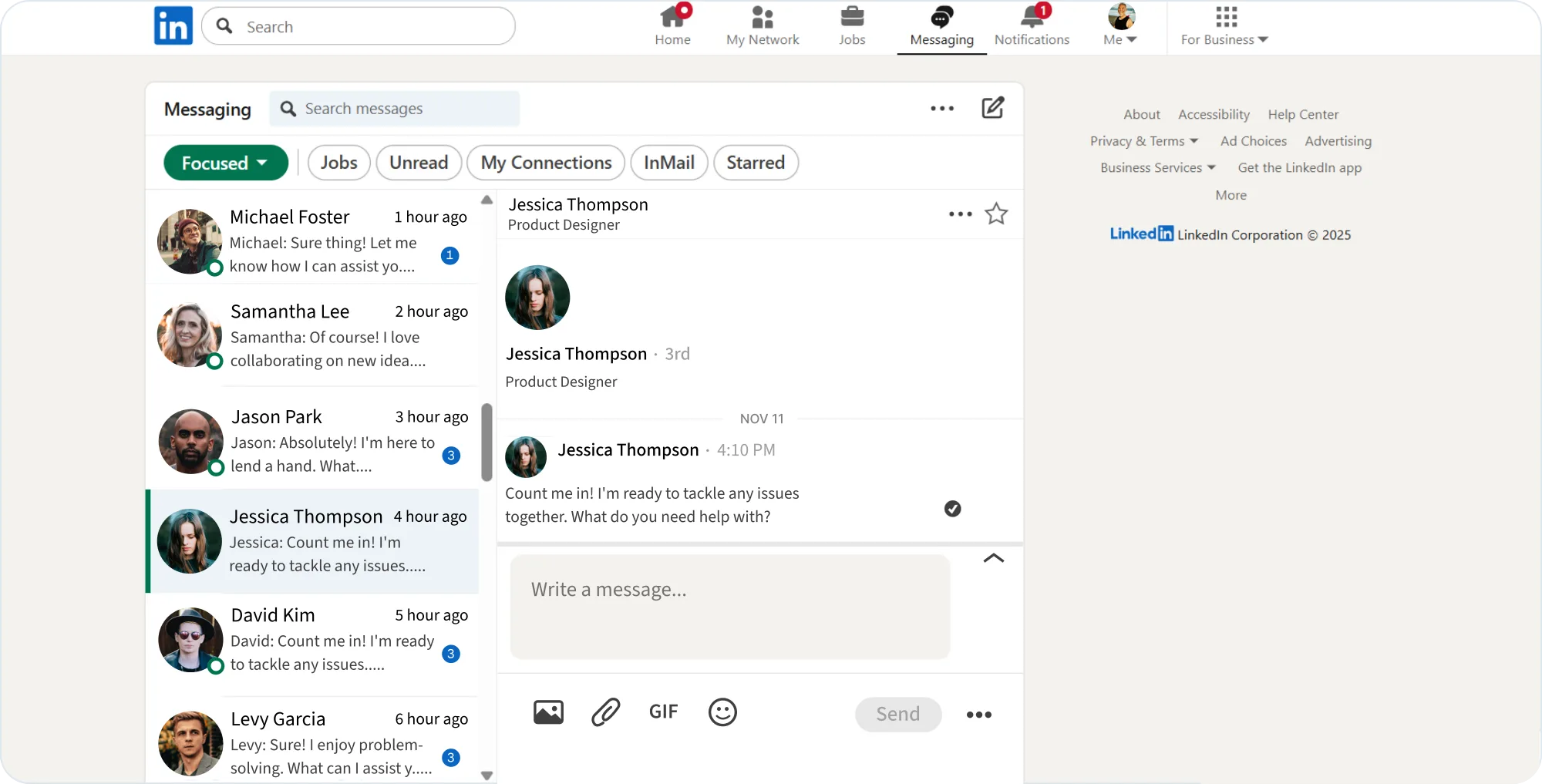
The surface ThreadJet sits on top of — LinkedIn's own messaging.
LinkedIn has never treated messages as an inbox. Threads arrive as a feature of the feed — one column, a Focused/Other toggle, a search box, and nothing you can act on without reaching for the mouse. For the people whose pipeline actually lives there, the medium is the bottleneck.
The constraint was that we could not change LinkedIn. ThreadJet is a layer on top of it, installed as a Chrome extension, with no LinkedIn password, read-only access where the platform needs it, and the ability to disconnect at any time. Every decision below had to fit inside that boundary.
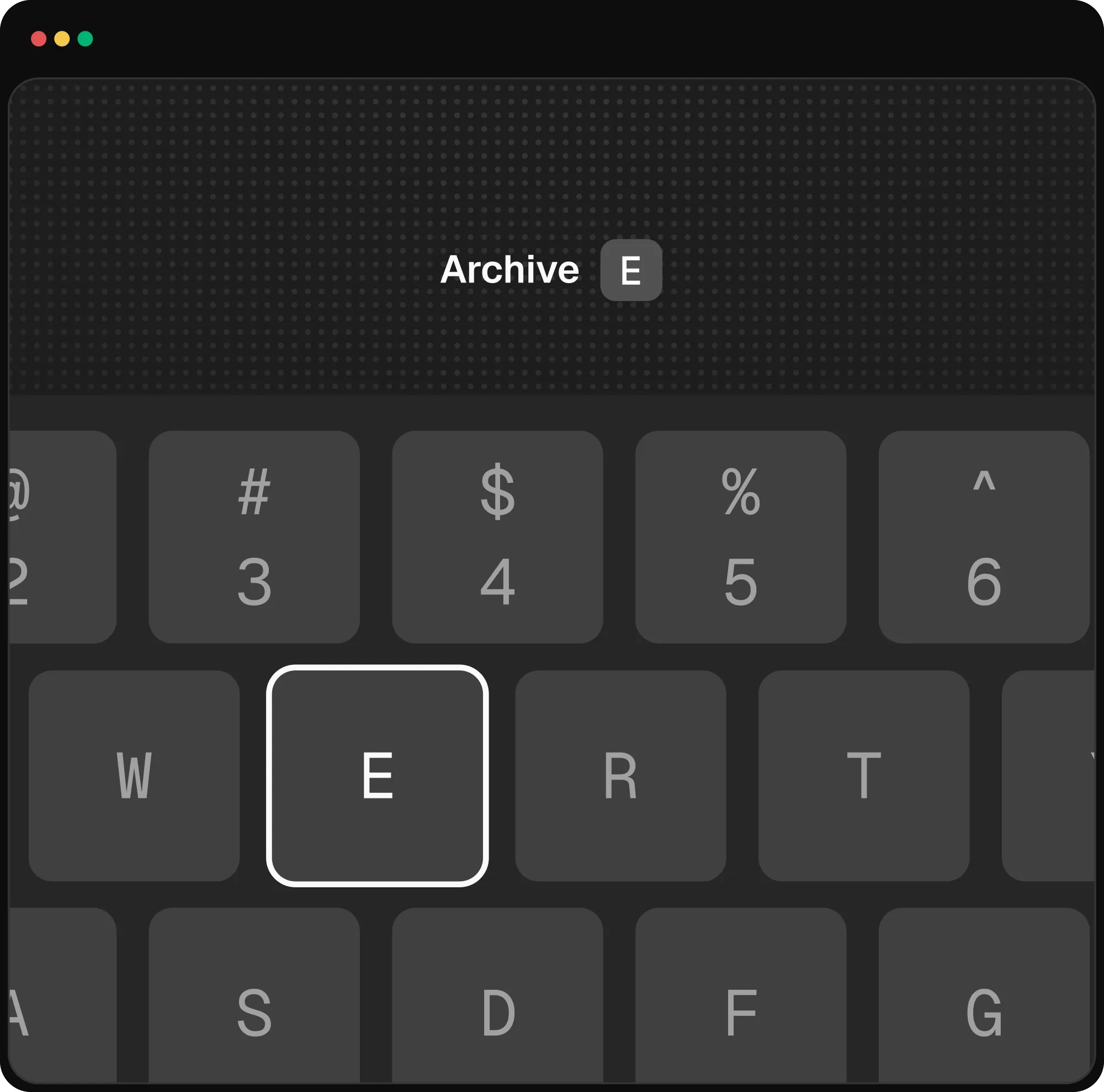
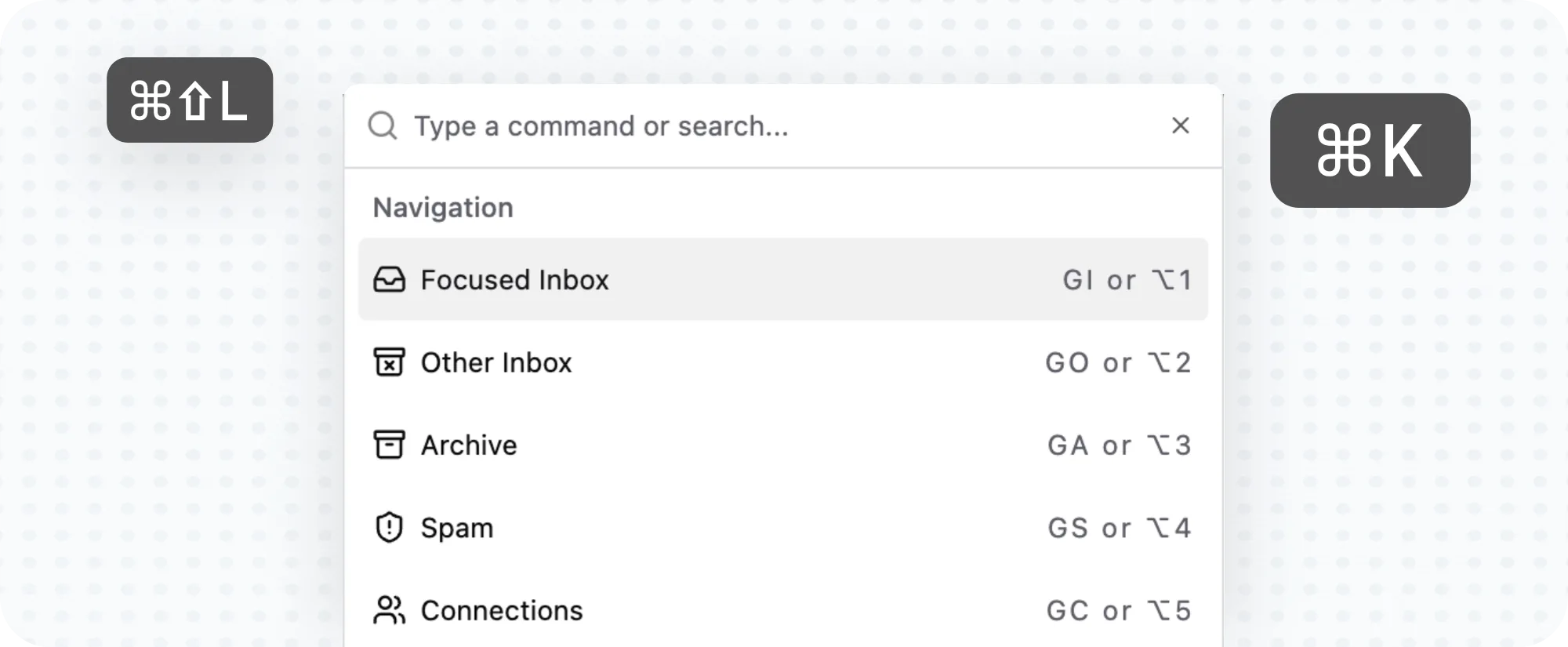
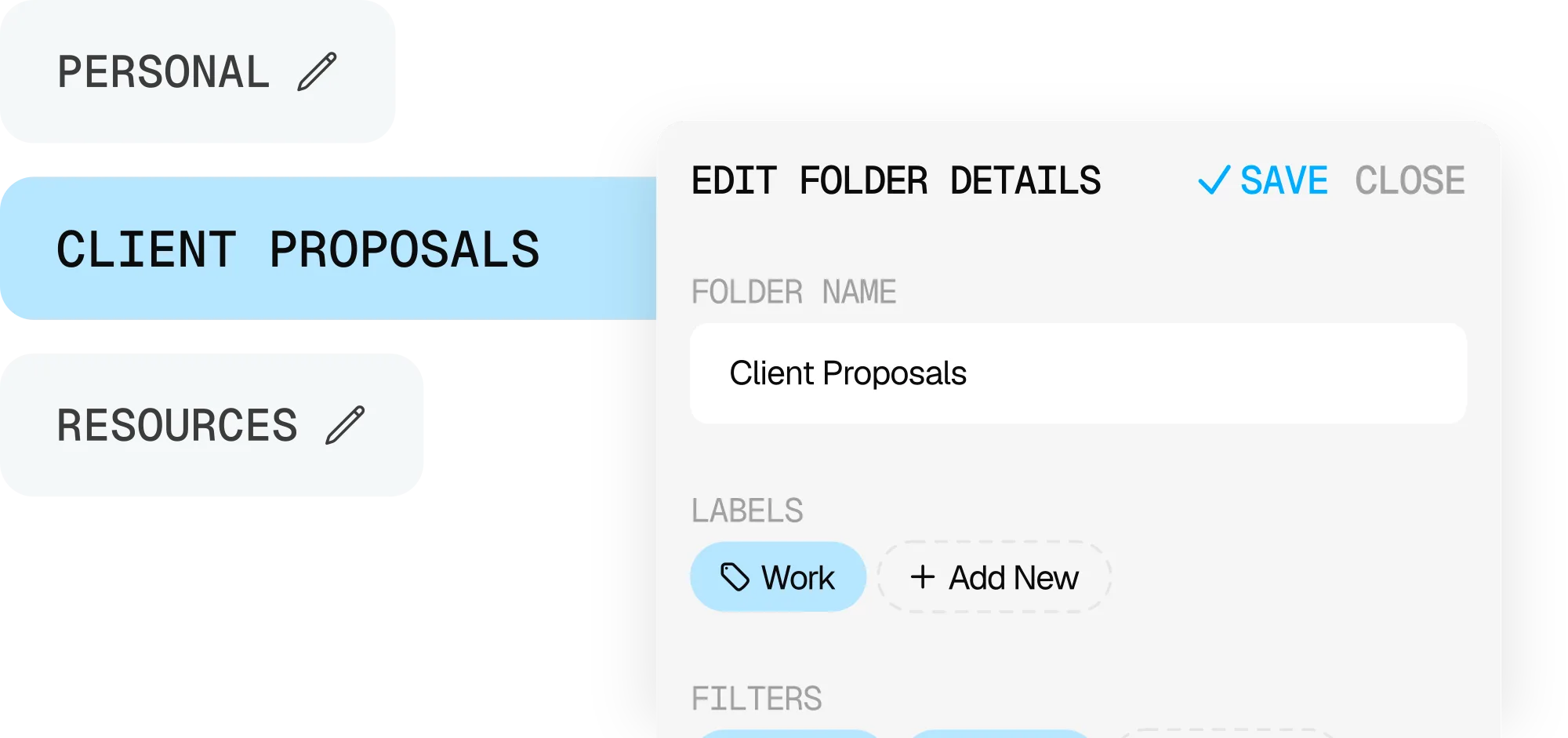
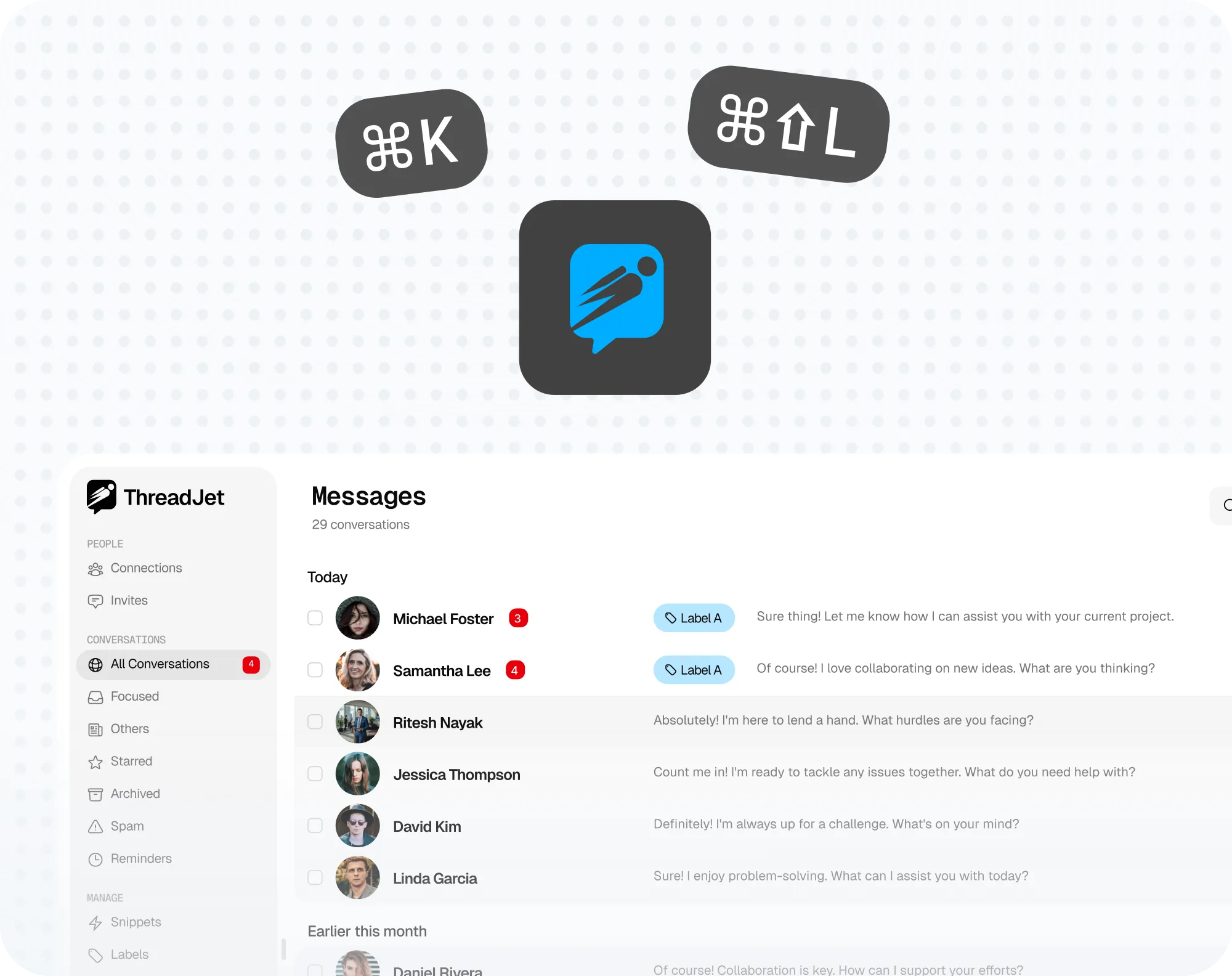
The first move was structural: give LinkedIn conversations the furniture an inbox has. Focused and Others, Starred, Sent, Archived, Spam, Reminders, Done. Labels and folders you define, with filters attached to them. Snippets that are personal rather than templated. Then bind all of it to the keyboard — a command palette for everything, and one-keystroke actions for reply, snooze, remind and tag — so the whole surface is reachable without the mouse.
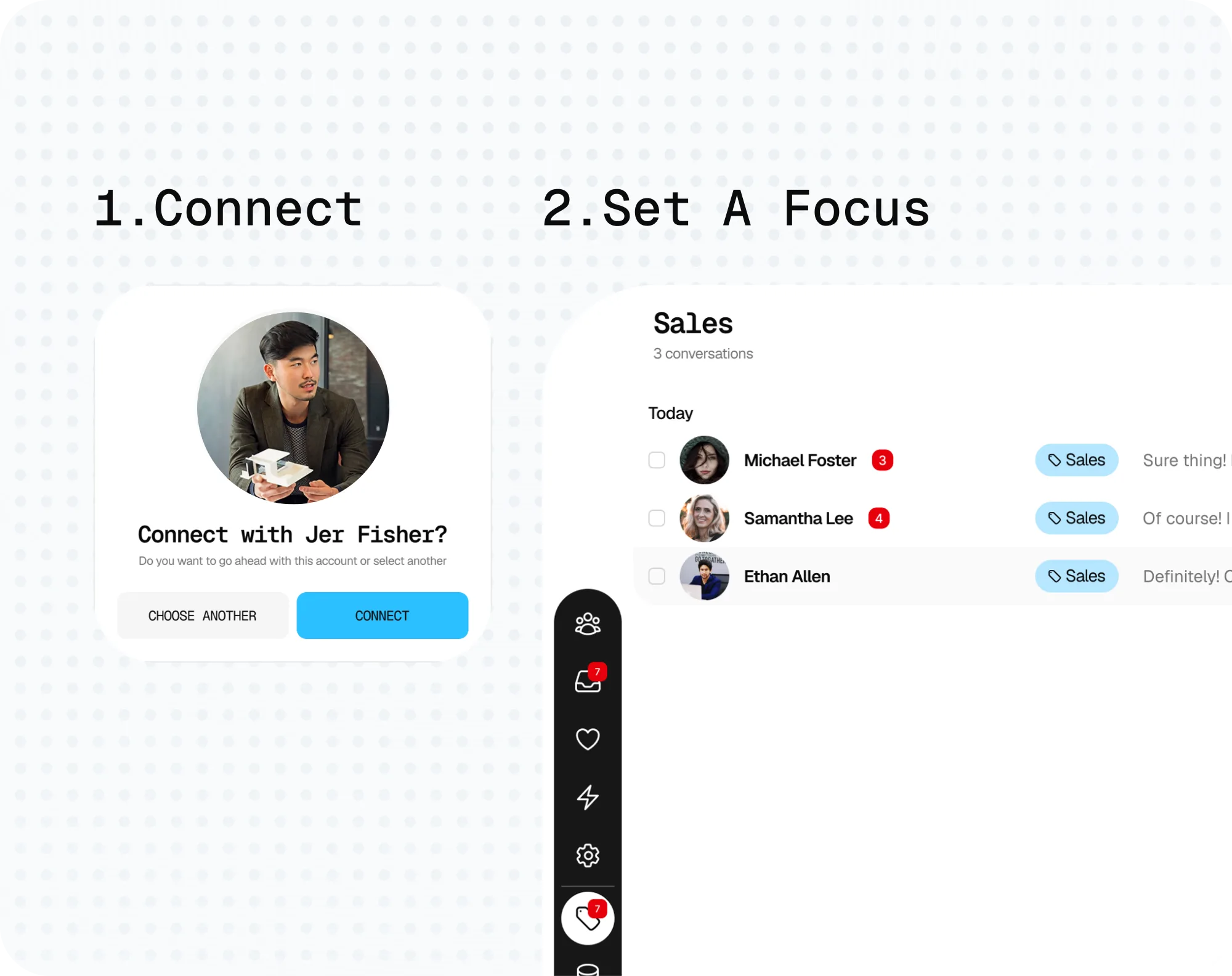
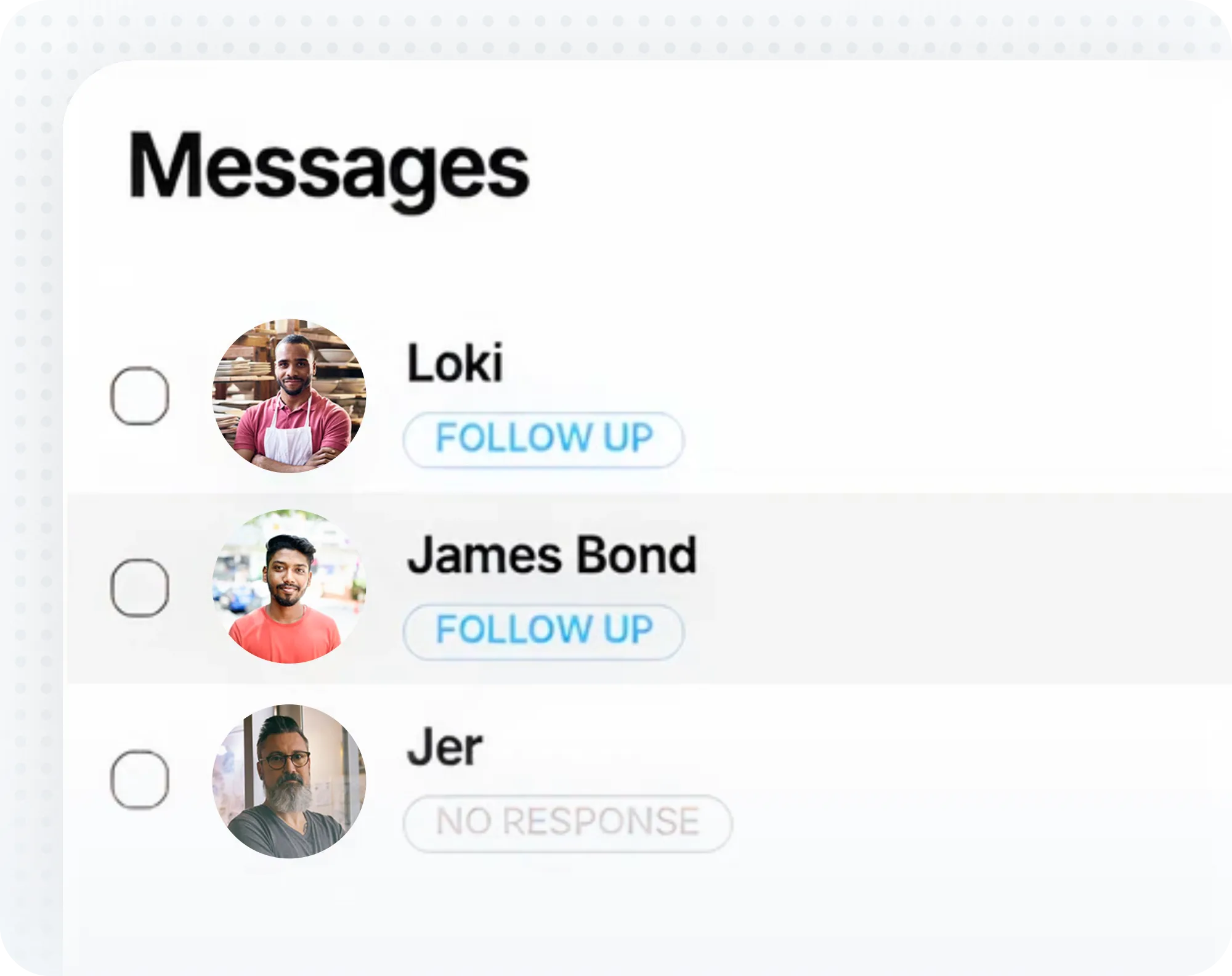
The second was that the list should carry the state, not the person reading it. A thread shows what it is waiting on, and ThreadJet reads the inbox to choose the vocabulary: a recruiter's rows fill with role fit, candidate stage and waiting on resume; the same rows in a sales inbox read warm lead, objection, meeting ready. Nothing to configure — the tags and views adapt to the work already in the account.
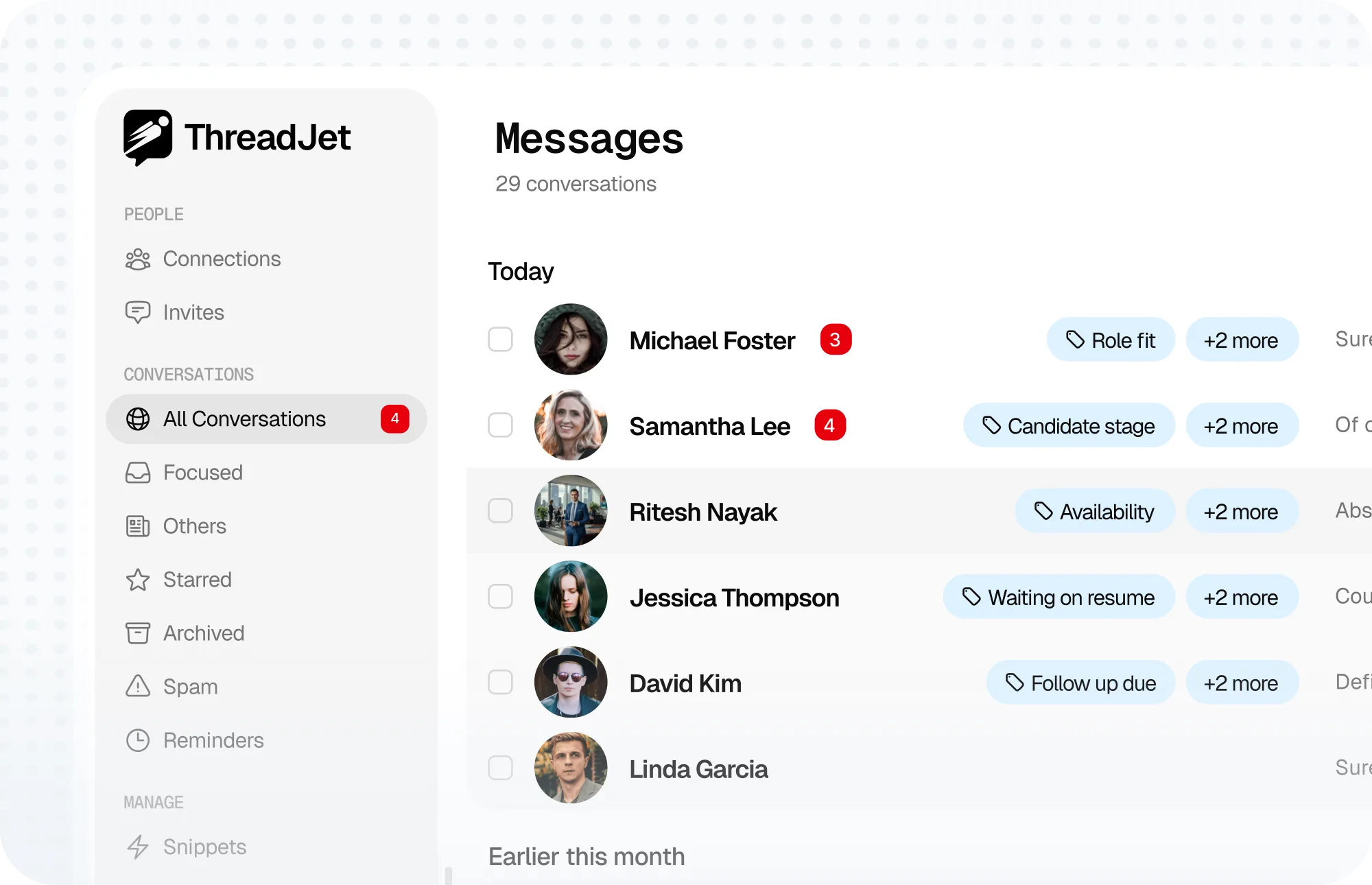
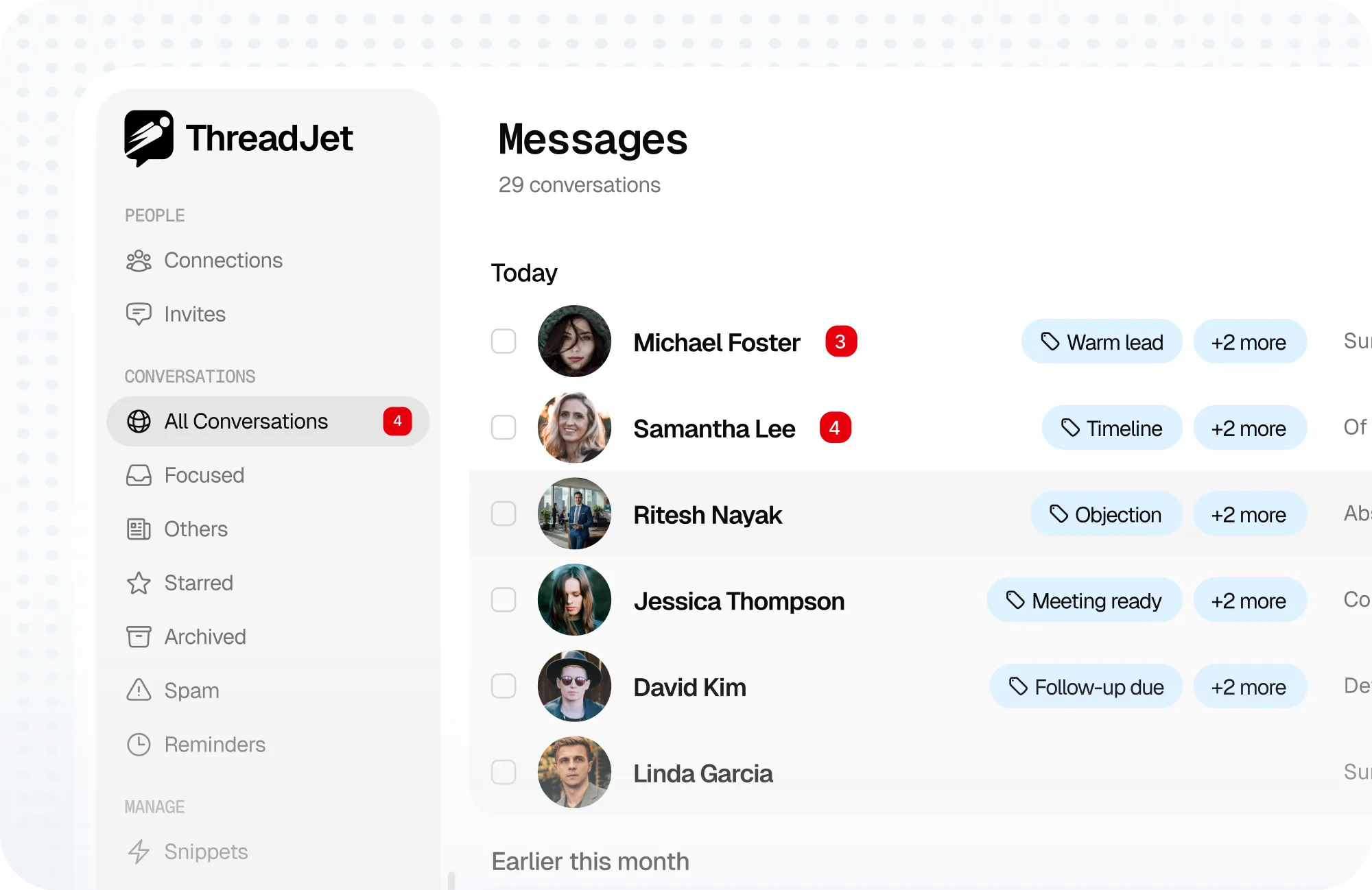
One inbox, two vocabularies — the tag set is inferred, not set up.
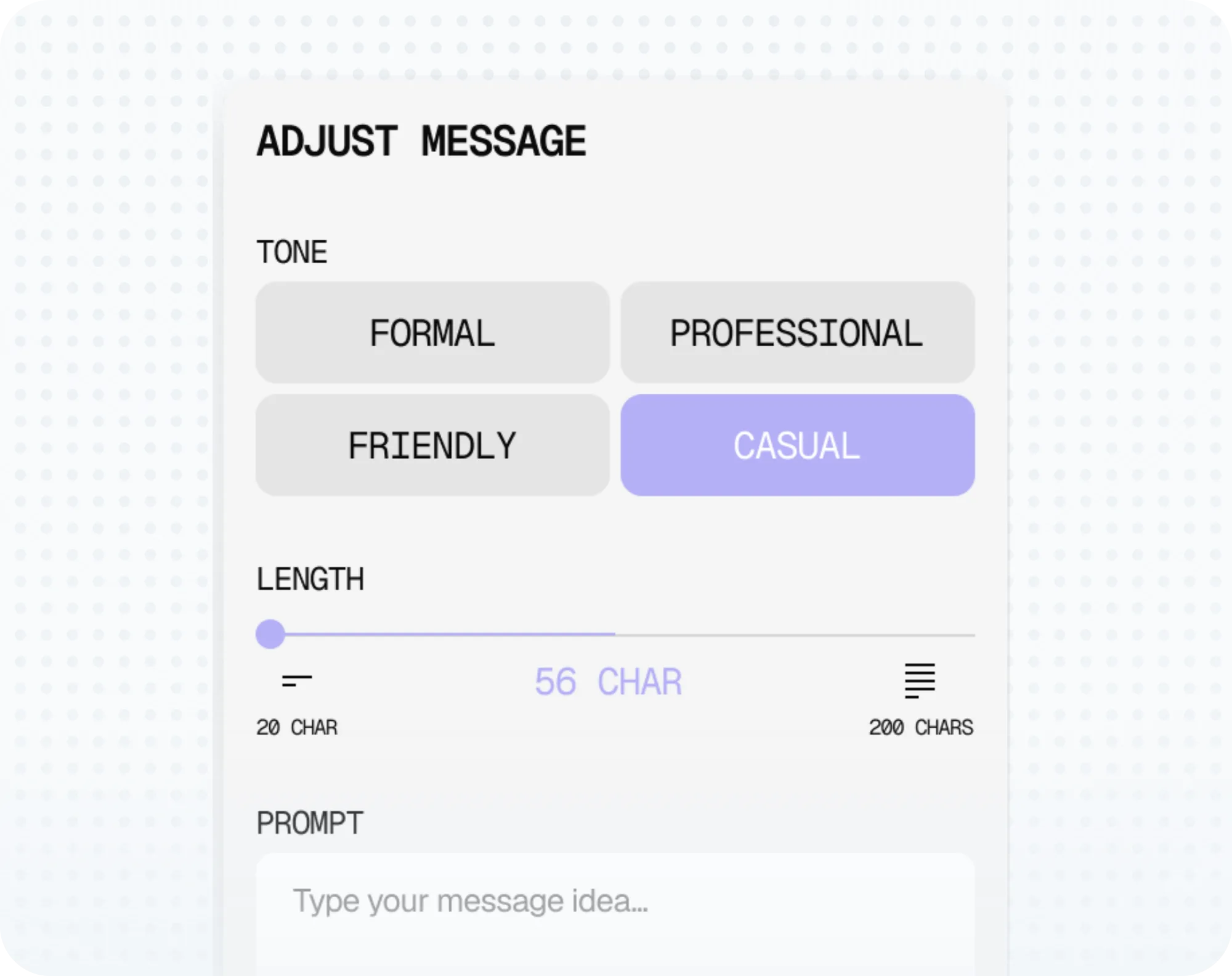
The AI half is deliberately not automation. ThreadJet drafts and you approve and send, so every AI surface had to be an object you could argue with rather than a black box. Tone is four named registers instead of a dial. Length is a character count you set. The prompt field is there if you want to steer the draft and empty if you don't.
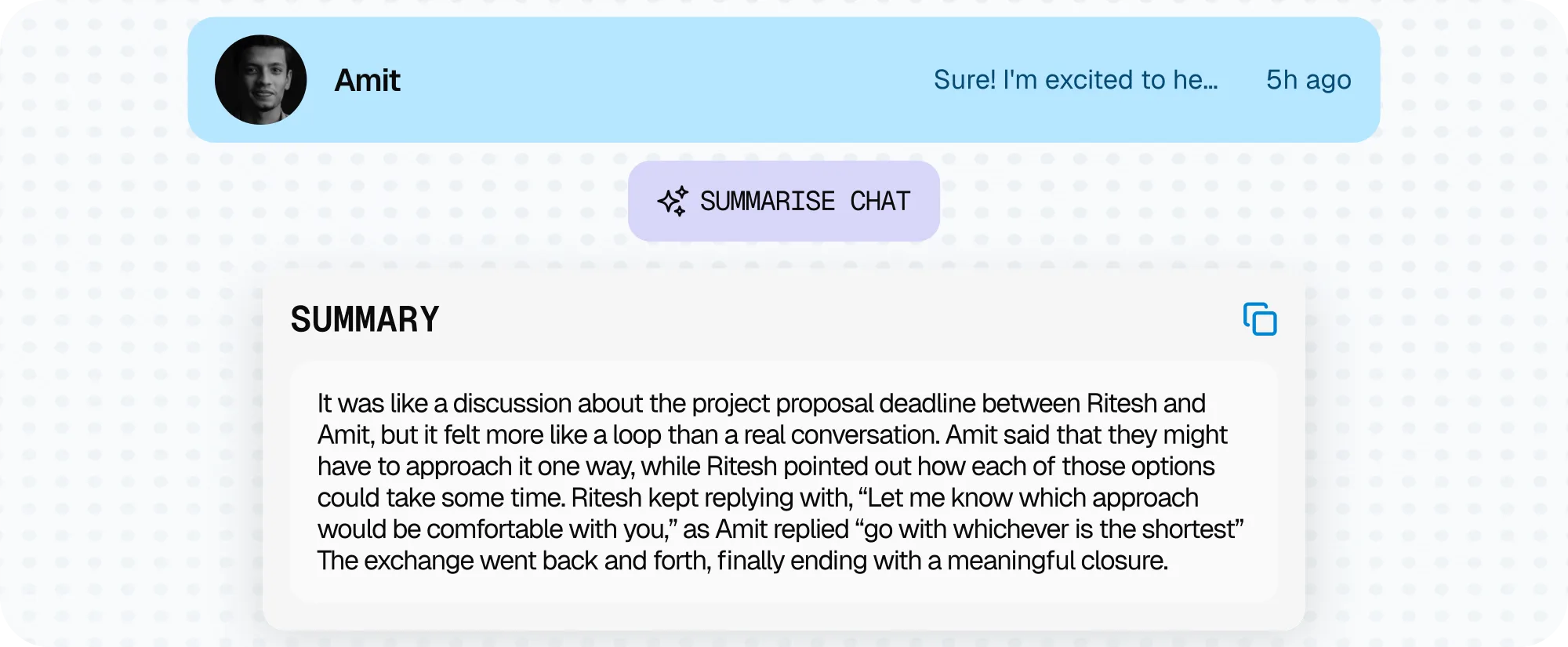
Summaries follow the same rule. A thread collapses into a single paragraph that floats over the conversation rather than replacing it, so the evidence stays one glance away — and inside a live thread, the summary, the tone controls and the drafted reply all sit in the same frame as the messages they came from.
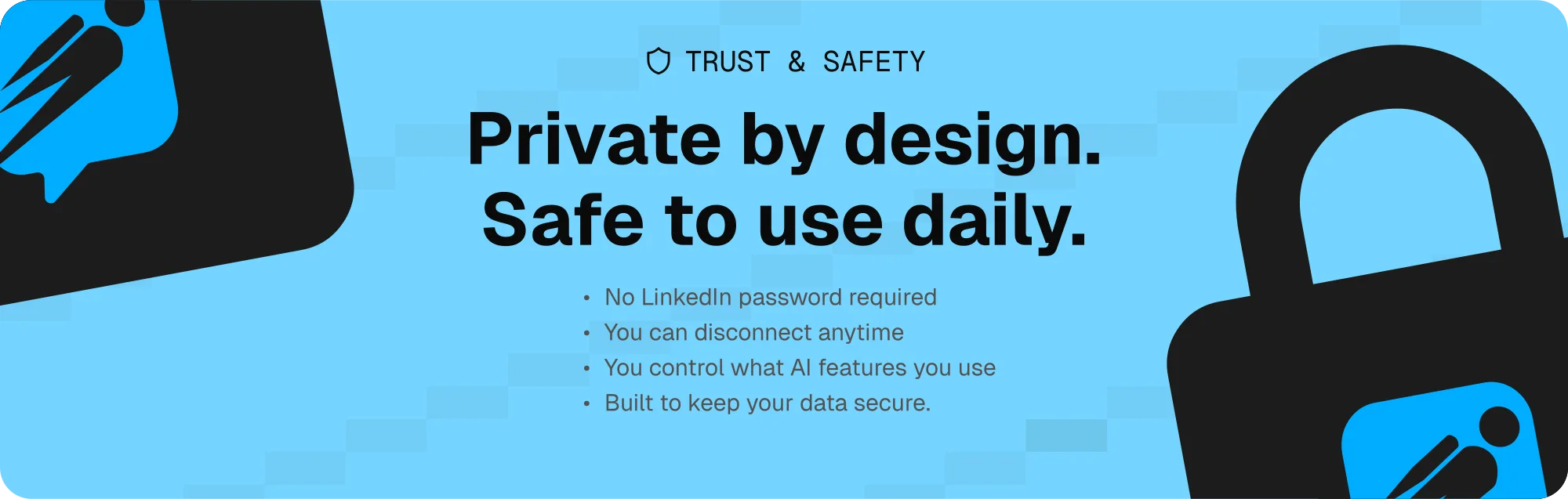
Trust was the last surface, and the decision was to state it rather than imply it. No LinkedIn password. Disconnect at any time. Read-only where the platform requires it. Explicit control over which AI features are switched on. It is a banner rather than a buried policy line because the objection arrives before the install does.
ThreadJet shipped in 2025 as a Chrome extension at threadjet.ai — two months from first frame to a live 0 to 1 product — and it goes to market on the sentence the design was built to earn: Superhuman for LinkedIn DMs.